Rehabilitation & Physiotherapy
Recovery Is More Than Physiotherapy: Understanding Multidisciplinary Rehabilitation in Hyderabad
Recovery after illness, surgery, injury or hospitalisation may involve more than physiotherapy alone. Learn how a multidisciplinary rehabilitation approach can bring physiotherapy, nursing support, nutrition and medical supervision together in a structured recovery environment.
Leaving a hospital does not always mean that the recovery journey is complete.
After surgery, injury, prolonged illness or hospitalisation, some individuals may continue to experience weakness, reduced mobility, difficulty walking, poor balance, fatigue or challenges performing everyday activities independently.
This period between hospital treatment and returning comfortably to everyday life can require structured rehabilitation.
At Cure Multispeciality Rehab, the rehabilitation process is approached from several aspects of a patient's recovery rather than focusing only on one therapy.
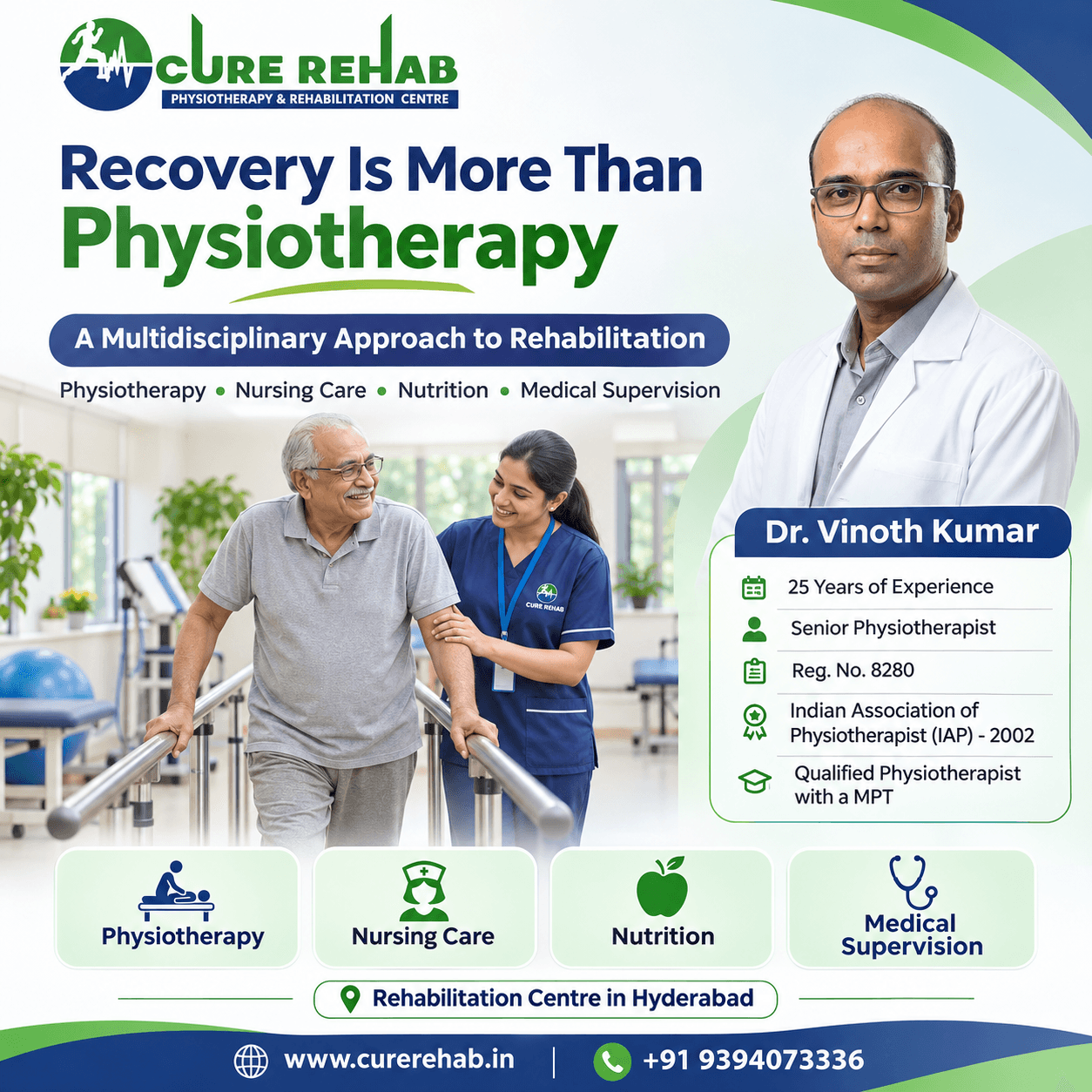
A coordinated rehabilitation environment can involve physiotherapy, nursing care, nutritional support and medical supervision, depending on the individual's clinical condition and rehabilitation plan.
Why Can Rehabilitation Require More Than One Type of Support?
Recovery can affect different areas of daily life.
A person recovering after surgery may need help rebuilding strength and walking safely. An elderly person recovering after hospitalisation may require assistance with mobility and routine activities. Someone recovering from an injury may need gradual functional training.
At the same time, nutrition, medication schedules, general health monitoring and daily nursing assistance may also form part of their overall care requirements.
This is why a multidisciplinary rehabilitation approach can be useful.
Rather than looking at recovery as a single treatment, the rehabilitation team considers different factors that may influence a person's ability to participate in daily activities.
The 4 Important Pillars of Rehabilitation Support
1. Physiotherapy and Functional Rehabilitation
Physiotherapy can form an important part of rehabilitation for individuals experiencing changes in mobility and physical function.
Depending on clinical assessment and medical advice, a rehabilitation programme may work on areas such as:
- Strength and conditioning
- Mobility
- Balance
- Walking and gait
- Transfers and functional movements
- Joint movement
- Everyday physical activities
The rehabilitation plan should be individualised because recovery requirements can differ considerably between patients.
For families searching for physiotherapy rehabilitation in Hyderabad, it is important to understand that rehabilitation programmes should be planned according to the person's medical condition, functional ability and treating team's recommendations.
2. Nursing Care During Rehabilitation
Patients recovering after prolonged illness, surgery or hospitalisation may require assistance beyond scheduled therapy sessions.
Nursing support may include help with routine care, observation of the patient's general condition and assistance with activities according to the prescribed care plan.
For elderly patients in particular, having structured support throughout the day can help provide a more organised rehabilitation environment.
This makes nursing support an important component of inpatient rehabilitation in Hyderabad, especially when a person requires assistance during the transition from hospital care towards greater day-to-day independence.
3. Nutrition and Dietary Support
Adequate nutrition is an important part of general health.
During rehabilitation, dietary requirements may vary depending on a person's age, existing medical conditions, activity level, appetite and advice from the treating healthcare team.
Appropriate nutritional planning can therefore be incorporated alongside rehabilitation rather than treated as a completely separate aspect of recovery.
Food and dietary requirements should always be individualised where medical conditions or dietary restrictions are present.
4. Medical Supervision and Care Coordination
Rehabilitation patients may have ongoing medical needs following hospitalisation, surgery, injury or illness.
Medical supervision can help review the individual's general health and coordinate rehabilitation with the broader treatment plan when required.
Changes in symptoms, medicines or clinical condition should be assessed by the appropriate treating medical professional rather than managed through rehabilitation exercises alone.
This coordination becomes particularly important when rehabilitation involves elderly individuals or patients with multiple health conditions.
Who May Require Structured Rehabilitation?
The need for rehabilitation should always be assessed individually. However, structured rehabilitation may be considered for people recovering from situations such as:
Post-surgery recovery: Individuals who experience weakness, reduced mobility or difficulty returning to routine activities after a surgical procedure.
Elderly or geriatric rehabilitation: Older adults experiencing reduced mobility, balance difficulties, weakness or functional limitations following illness or hospitalisation.
Injury rehabilitation: People working towards restoring movement and everyday function following an injury, according to medical advice.
Neurological rehabilitation: Individuals with neurological conditions may require appropriately planned rehabilitation focusing on mobility and functional abilities.
Mobility and balance rehabilitation: Rehabilitation may support people who have difficulty walking, maintaining balance or completing transfers safely.
Recovery after prolonged hospitalisation: Extended periods of reduced activity can be associated with loss of strength and functional capacity, making gradual rehabilitation appropriate for some individuals.
Searching for a Rehabilitation Centre in Hyderabad?
Families often begin searching online using phrases such as:
“rehabilitation centre in Hyderabad”
“inpatient rehabilitation Hyderabad”
“elderly rehabilitation Hyderabad”
“physiotherapy rehabilitation centre near me”
“post surgery rehabilitation Hyderabad”
“geriatric rehabilitation centre Hyderabad”
Choosing rehabilitation should not be based only on a single service.
Families may wish to understand whether the rehabilitation plan considers the person's physical function, daily support needs, nutrition, medical condition and ability to safely participate in everyday activities.
A structured environment can also be particularly relevant when family members live outside Hyderabad or abroad and an elderly parent requires additional assistance during recovery.
Rehabilitation for Elderly Patients in Hyderabad
Older adults can experience different challenges after hospitalisation compared with younger patients.
Even after the original medical condition has stabilised, an elderly person may continue to experience weakness, decreased confidence while walking, reduced balance or difficulty carrying out everyday activities.
An elderly rehabilitation programme in Hyderabad may therefore focus on helping the person work gradually towards functional goals that are appropriate for their condition.
The pace of rehabilitation varies from person to person.
The aim should be to provide structured professional support while respecting the individual's medical needs, abilities and safety.
Rehabilitation After Surgery or Hospitalisation
The period immediately following discharge can sometimes be challenging for both patients and families.
Questions may include:
Can the person walk safely?
Can they get in and out of bed?
Are they able to manage routine activities?
Do they require assistance throughout the day?
What level of rehabilitation has been advised by their treating team?
These questions can help families understand whether additional rehabilitation support may be appropriate before the person returns fully to their previous routine.
A Patient-Centred Approach to Rehabilitation
No two rehabilitation journeys are exactly the same.
Age, medical history, diagnosis, surgery, previous mobility, overall health and family support can all influence rehabilitation planning.
For that reason, a responsible rehabilitation approach should avoid promising a particular recovery speed or guaranteed outcome.
Instead, rehabilitation should focus on individual assessment, realistic functional goals, appropriate professional support and regular review of progress.
Cure Multispeciality Rehab – Hyderabad
Cure Multispeciality Rehab provides rehabilitation-focused support for individuals whose care requirements may include physiotherapy, nursing assistance, nutrition and medical supervision.
Areas of rehabilitation support may include:
- Elderly rehabilitation
- Geriatric physiotherapy
- Post-surgery rehabilitation
- Injury rehabilitation
- Neurological rehabilitation
- Mobility training
- Balance and gait training
- Functional rehabilitation
- General physiotherapy
- Assisted recovery support
The appropriate rehabilitation programme depends on the individual's medical condition and assessment.
Supporting the Journey From Hospital Towards Everyday Life
Recovery is rarely about one exercise, one treatment or one professional.
For some patients, it involves a combination of mobility training, daily nursing support, appropriate nutrition, clinical monitoring and gradual return to everyday activities.
A coordinated multidisciplinary approach helps keep these different aspects of rehabilitation connected.
For families exploring a rehabilitation centre in Hyderabad, understanding the patient's actual medical and functional needs is an important first step.
Cure Multispeciality Rehab
Move. Recover. Live Better.
📍 Begumpet, Hyderabad
📞 +91 9394073336
🌐 curerehab.in
Families can contact the centre to enquire about available rehabilitation services and discuss whether an assessment may be appropriate for their family member.
Frequently Asked Questions
What is multidisciplinary rehabilitation?
Multidisciplinary rehabilitation involves professionals from different areas working around an individual's rehabilitation requirements. Depending on the person's condition, this may include physiotherapy, nursing care, nutritional support and medical supervision.
Is rehabilitation only for patients after surgery?
No. Rehabilitation may be considered after surgery, injury, illness, hospitalisation or for certain neurological, mobility and functional difficulties. Suitability depends on individual assessment.
Is rehabilitation suitable for elderly patients?
Some elderly individuals may benefit from rehabilitation when illness, hospitalisation, surgery or reduced activity has affected their mobility, balance, strength or everyday function. Their medical condition should be considered before planning rehabilitation.
How long does rehabilitation take?
There is no standard duration that applies to every patient. Rehabilitation requirements and progress vary according to the person's health condition, functional status, medical history and treatment plan.
Does rehabilitation guarantee complete recovery?
No responsible rehabilitation programme can guarantee a particular outcome. Rehabilitation aims to support the individual's functional recovery according to their condition, abilities, clinical assessment and medical guidance.
Important Disclaimer
This article is intended for general educational and awareness purposes only. It should not be considered medical advice, diagnosis, treatment advice or a guarantee of recovery. Rehabilitation requirements, suitability, duration and outcomes vary between individuals. Patients and families should consult the appropriate treating medical professionals for personalised advice and rehabilitation planning.